Hello there! Well I was expecting to start posting more on here a week ago but after over two years of avoiding covid, including my young daughter getting it twice and not passing it on to anyone else in the house, it finally got me.
I have been luckier than most as I have only had one day of being really bad and laid out in bed but I cannot return to work until I get two clear LF tests.
Meanwhile I have visited the Tank Museum in Saumur before but missed this museum, their website is here.

This is the building which houses the exhibits and it is in the grounds of a much larger complex still used by the French Military. The building above is the former stables.


I think these stables may have been more extensive and were at both ends of the exhibit rooms.


Leaving the stables you enter the museum proper. This paintings artist is named Bellange Hyppolite, so a familiar name in the Napoleonic period. Unfortunately the lighting was poor but this was probably to protect the exhibits.

This painting did not have a name, that I could see.


This was a sabretache of the 4th Hussars, and looked original but am open to its age as the crown may mean it was not 1st Empire? I am only guessing there but the description plate above does not give a year.


This is a copy of a sword of the Horse Grenadiers of the Guard. It looked heavy so handling this could not be easy for an average modern day person. Seeing something like this close up gave you the idea of the weight of this sword.


This painting is entitled the 11th Chasseurs. This display cabinet is centred around The Austerlitz Campaign with the paintings based on that period too.

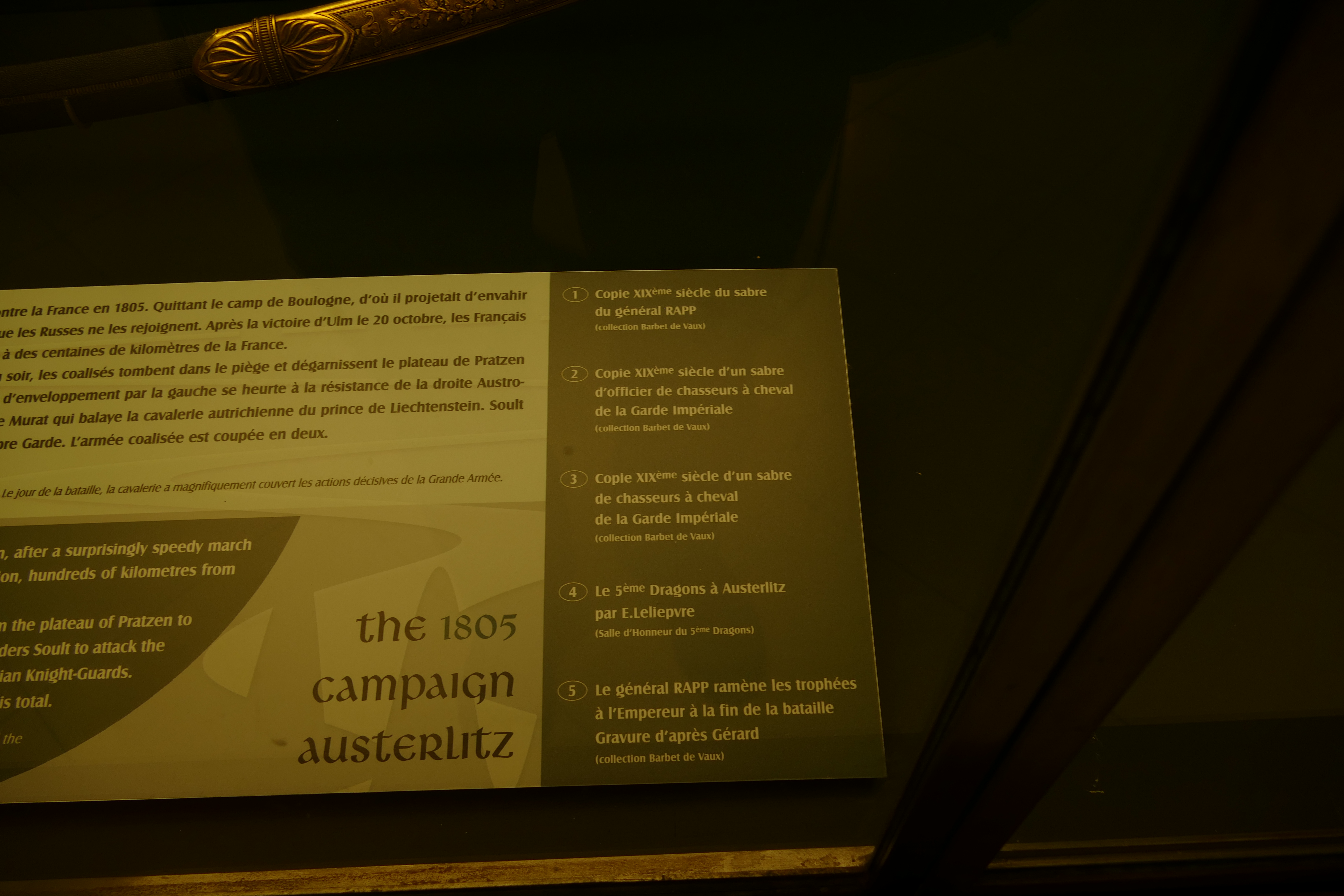
Again three copies of swords from the First Empire. Here attributed to General Rapp.


The two cuirasse above are the 1804 and 1812 models. These did appear original and the captions to go with them did not say they were copies.

A larger display of a cuirassier was prominent in the museum.

This display was cantered around the Guard with a horse grenadier and a copy of a standard of the regiment.


This shako was from the Guides of the Imperial Guard. I was able to get a close up of the cords decoration as I have not seen the intricacy of them close up before. Someone actually had the job to make these all day long?
This was a relatively short lived unit so maybe quite rare.

This was a copy of the original standard as this was very pristine for something that was 200 years old.

The figure was dressed in the surtout jacket but still looked impressive. The aiguillette was very red in colour, something I thought would be much more orange for the 'aurore' colour.


This was described as a Marshals bicorne which did appear very worn, especially the feathered edging. The leather was also very faded.

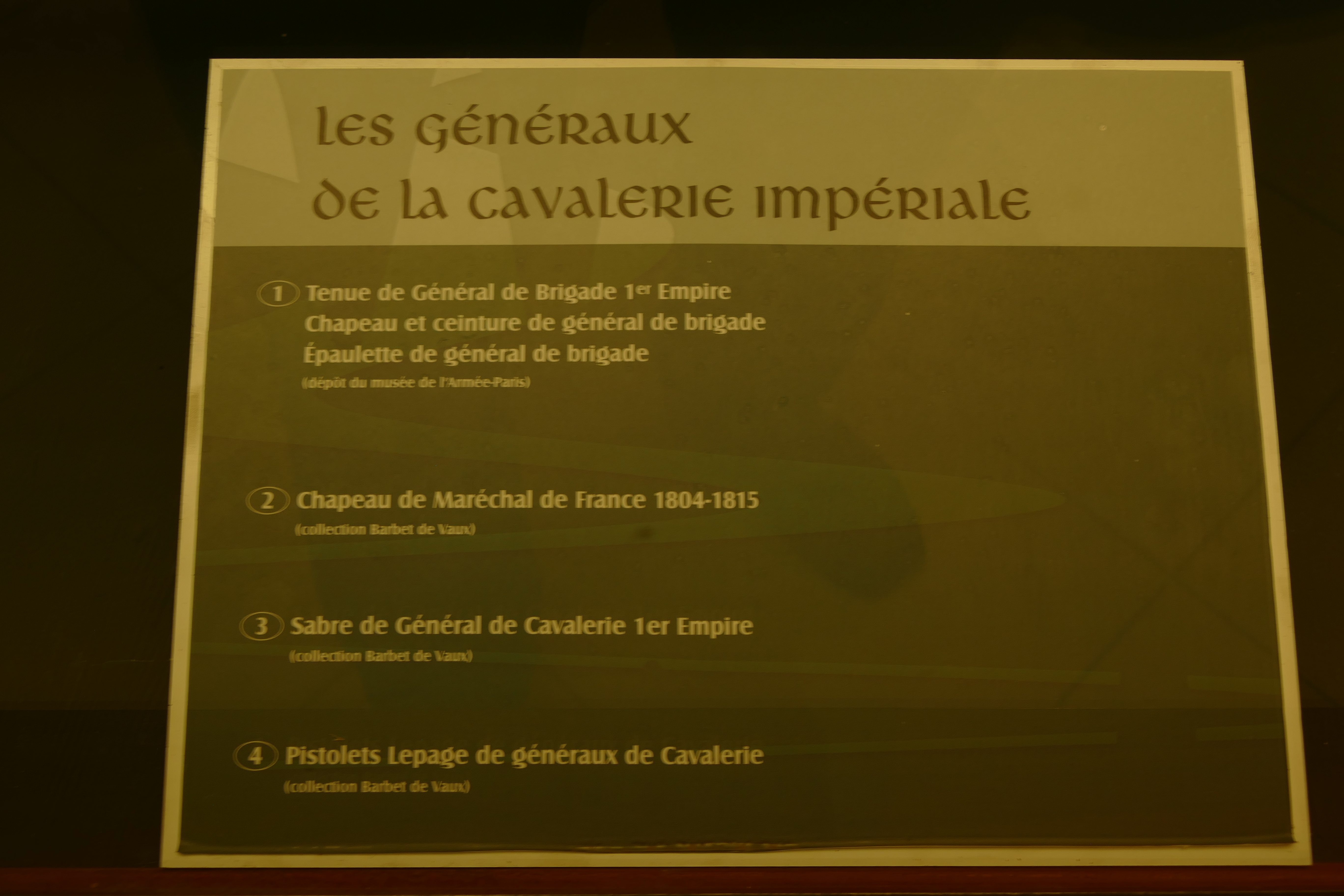

The pistols, bicorn of a Marshal of France, sword and uniform of a General of Brigade were all original.


The few flags that were on display are all behind two layers of glass so difficult to photograph closely.


This display concentrated on the Dragoons of the French Napoleonic army. It included helmets, swords and plates of their uniforms as well as some guidons.


Next we were onto Fontenoy. This also had a lot on display.


At the far end of the museum there were a number of WWI and WWII displays. There are displays of medals and memorabilia.


Some French subjects included a French Foreign Legion Kepi Blanc and a display of hospital instruments.


A display of German equipment includes firearms, a panzerfause shell, a tank jacket, (probably the 'wrapround' version used by SPG crews), although it was in a 'zeltbahn' pattern


There were also a number of WW II exhibits from the early part of the war.


I cannot resist a pickelhaube! I have seen many examples of this type of headgear for sale over the years, usually for many hundreds of pounds.


Lastly outside there was a Sherman HVSS tank. Overall it was a very enjoyable visit with many exhibits that I have never seen before. In some ways it was more enjoyable that the tank museum. Highly recommended.


